
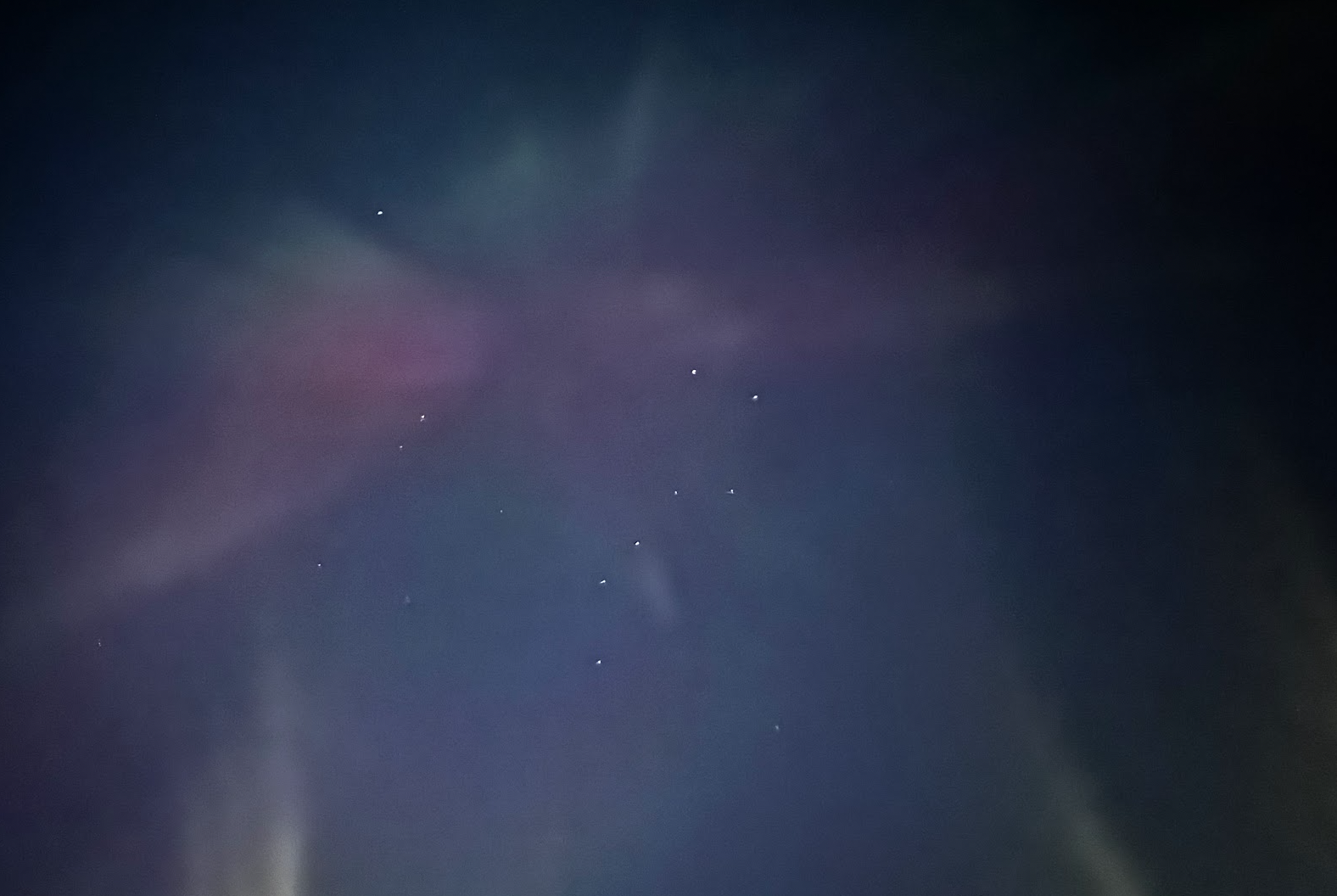
Longyearbyen, Svalbard, 78.22° N.
November, 2025
Questionig Darkness
“But it is also true that one will never experience in the Arctic anything that one has not oneself brought there,”
Christiane Ritter, A Woman in the Polar Night
Questioning Darkness is a research project dedicated to the positive impact of polar night darkness on one’s mental health and resilience. It was conceived during a residency at the Spitsbergen Artist Center, Longyearbyen, in the 2025 polar night.
Darkness and Mental Health
Diaries of Shackleton, Scott, Christiane Ritter and Nansen, read to reframe darkness from “a sneaking evil spirit” to self-discovery and transformation.
Voices of Longyearbyen
Interviews with locals and winter residents: guides, spouses accompanying scientists, and artists who traded a sunny mainland life to feel alive.
Black Without Black
Our eyes can distinguish at least 134 shades of black. All the paintings look black, but not an ounce of black paint was used.
Paintings in Sound
Each painting has its own soundtrack, made by converting pixels of colour into sound, so everyone can hear the voice of the polar night.
Questioning Darkness
Questioning Darkness is a research project dedicated to the positive impact of polar night darkness on one’s mental health and resilience. It was conceived during a two-week residency at the Spitsbergen Artist Centre in Longyearbyen, Svalbard, 78 degrees North, in the 2025 polar night.
The project was born from the strong legacy of polar exploration: the diaries of Shackleton, Scott, Amundsen, Christiane Ritter and Fridtjof Nansen, the latest MOSAiC Arctic expedition, and interviews with Longyearbyen locals and winter residents. It reframes the impact of darkness from the widely known “the sameness of those cold, dark nights attacks the minds of men like a sneaking evil spirit” to the Inuit description of night as a “mother’s warm embrace. The season in which their laughter can most often be heard.”
Our eyes can distinguish at least 134 shades of black. The artistic challenge lies in using no black colour to recreate the hues of darkness observed in the Svalbard polar night. All the paintings are made in dark shades which look black, but not an ounce of black paint was used. Each hue is disrupted by some environmental phenomenon: there is no black and white in the real world. We live within a palette of feelings and experience, and only our own point of view labels them black (bad, destructive) or white (good, pleasing).
“Each vague feeling I brought here was shaped into a question and transformed into a colour I discovered: anxiety became a Snowy Umbra Sky, persistence turned into a Golden Orange Moon Halo, sadness forged a Cobalt Sage Blue, and longing layered into a Purple Snowy Sky.”
To give visitors a resilience tool for reframing negative “dark” events and feelings
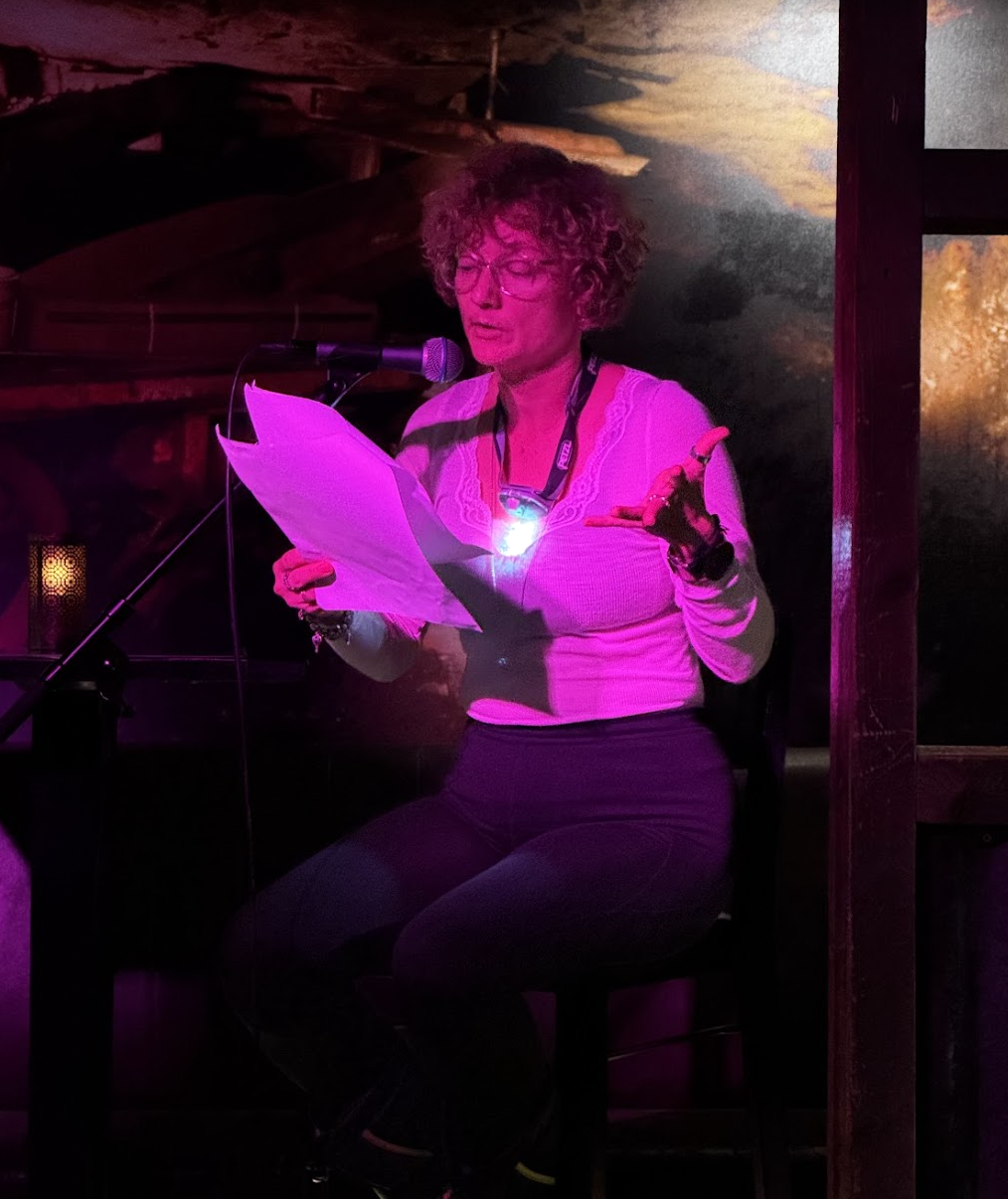
Chasing the Darkness
The artworks move in three stages.
First come the paintings created while living the polar night. Next are the stamps, an original technique invented by the artist to visualise movement and exchange, taken as a reminder of the knowledge discovered.
Last are the post-works created through 2026 in a recreated polar night. Living in a country of 360 days of sunshine, the artist works only at night or pre-dawn.
Together they navigate from the original darkness to darkness as a chosen state.
Each painting carries an open-ended question as both its title and an entry point. An essay highlights the different aspects of darkness’s impact: sensory, visual, sensual, cognitive and mental. For each painting, the artist has created a soundtrack through sonification, converting pixels of colour into sound, so everyone can hear the voice of the polar night.

Who decides when I should give up?
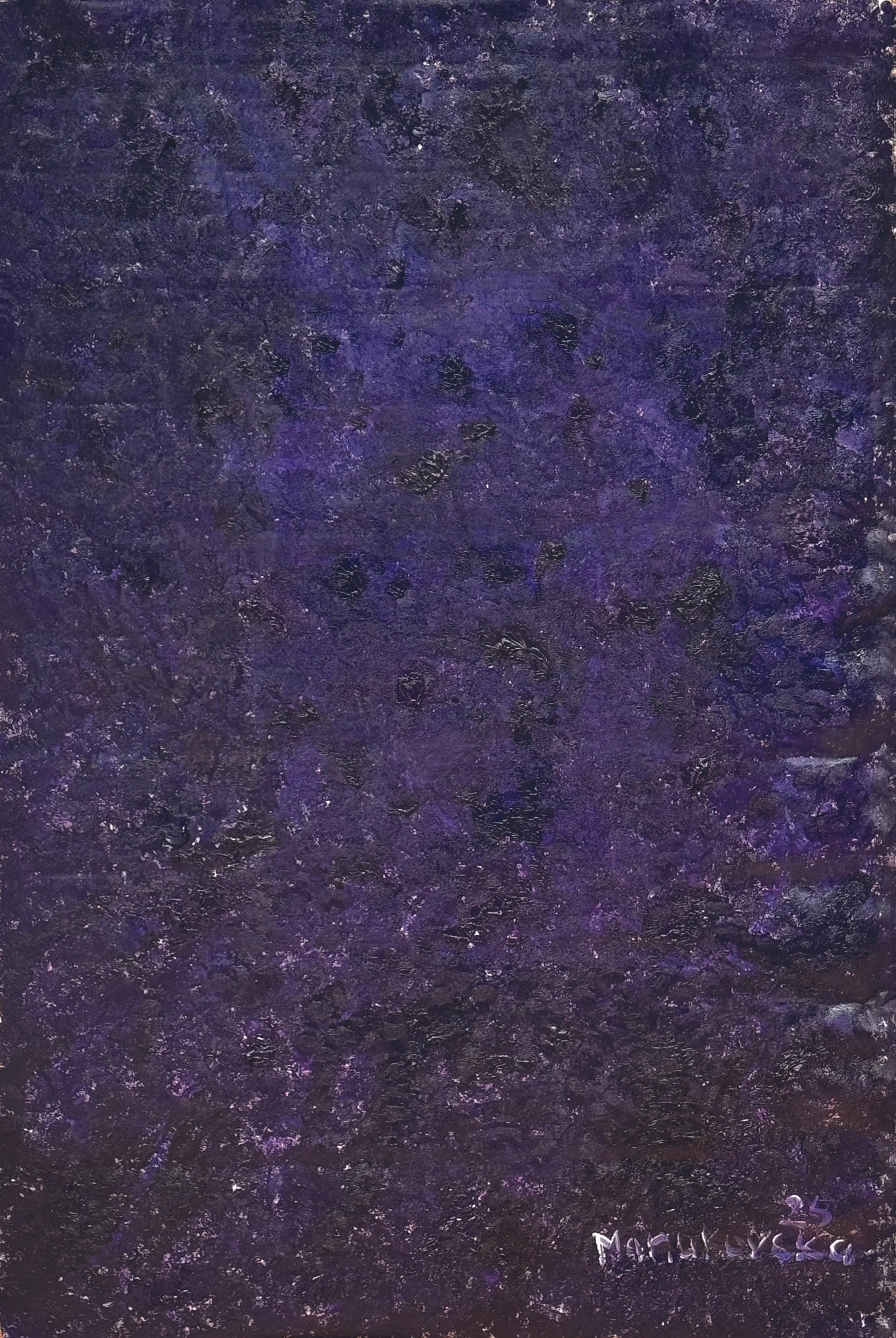
Do we need magic to make our wishes come true?

Can sadness strengthen you?
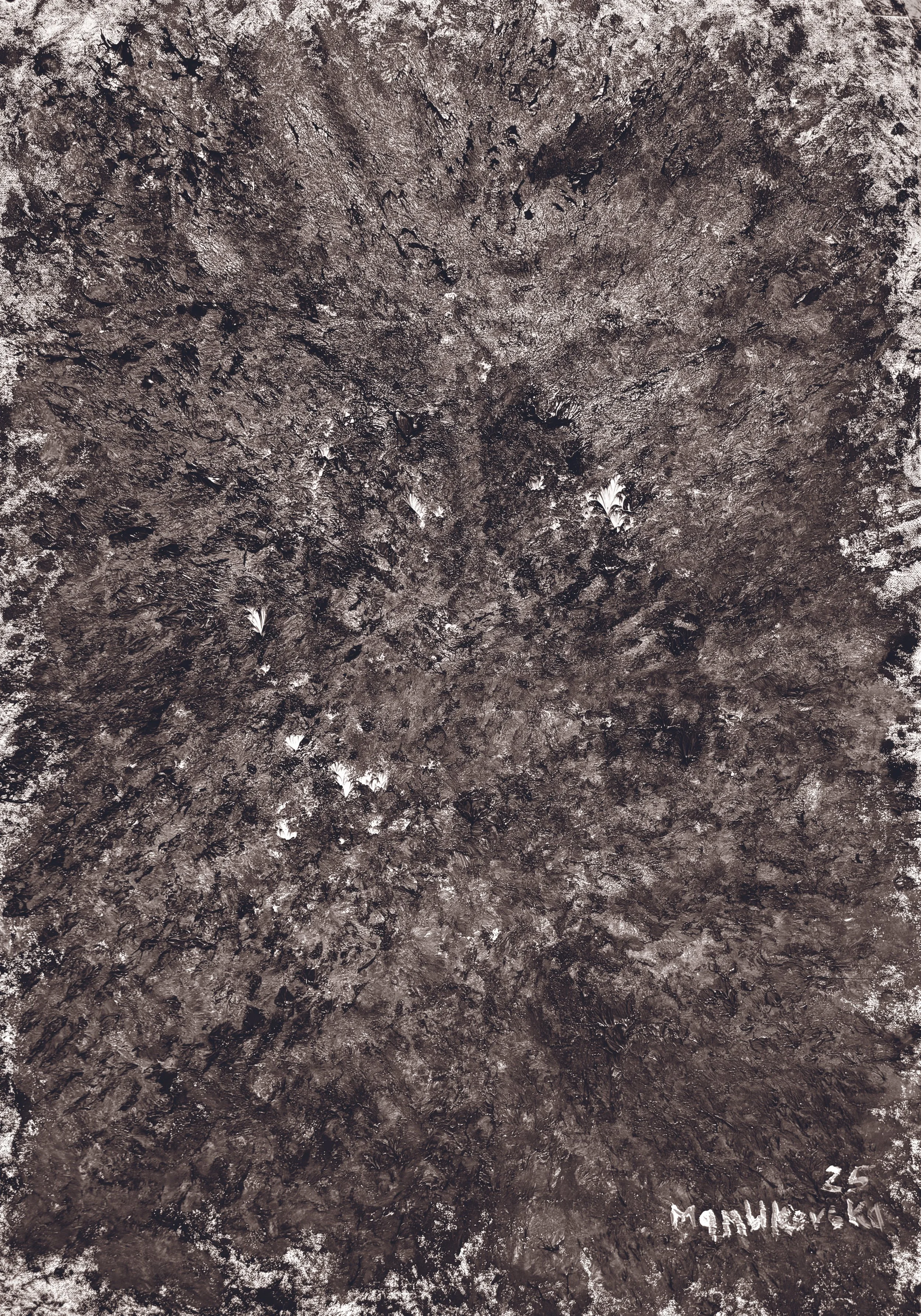
If that most painful memory could be forever gone, would you finally be happy?
Darkness Has Its Colours
Our eyes can distinguish at least 134 shades of black. In the 2025 polar night, moving further from light, Iryna Manukovska discovered colourful darkness. She collected shades of black, gave them names, and now uses them in her work. Four colours were born in Longyearbyen.
The series has four diptychs. Each original (100 × 150 cm, oil on canvas, 2025) is paired with its stamp (50 × 90 cm).
If that most painful memory could be forever gone, would you finally be happy?
Snowy Umbra Sky
Anxiety. A whirlpool mix of brownish night snowfall, seen on the way down from a glacier hike.
Painting: If that most painful memory could be forever gone, would you finally be happy?
Golden Orange Moon Halo
Persistence. A warm, cosy black with a glimpse of welcoming yellow: candlelight in house windows on a silent night of carol singing.
Painting: Who decides when I should give up?
Cobalt Sage Blue
Sadness. A morning twilight breeze of cobalt and Oriental blue, ultramarine and phthalocyanine, with a vague glimpse of greenish turquoise aurora.
Painting: Can sadness strengthen you?
Purple Snowy Sky
Longing. Purple lake, mauve, violet, ultramarine and dioxazine: catching soft snowflakes with an open mouth, head tossed back.
Painting: Do we need magic to make our wishes come true?